Aquatic species · Zebrafish
Zebrafish tanks, water and crosses
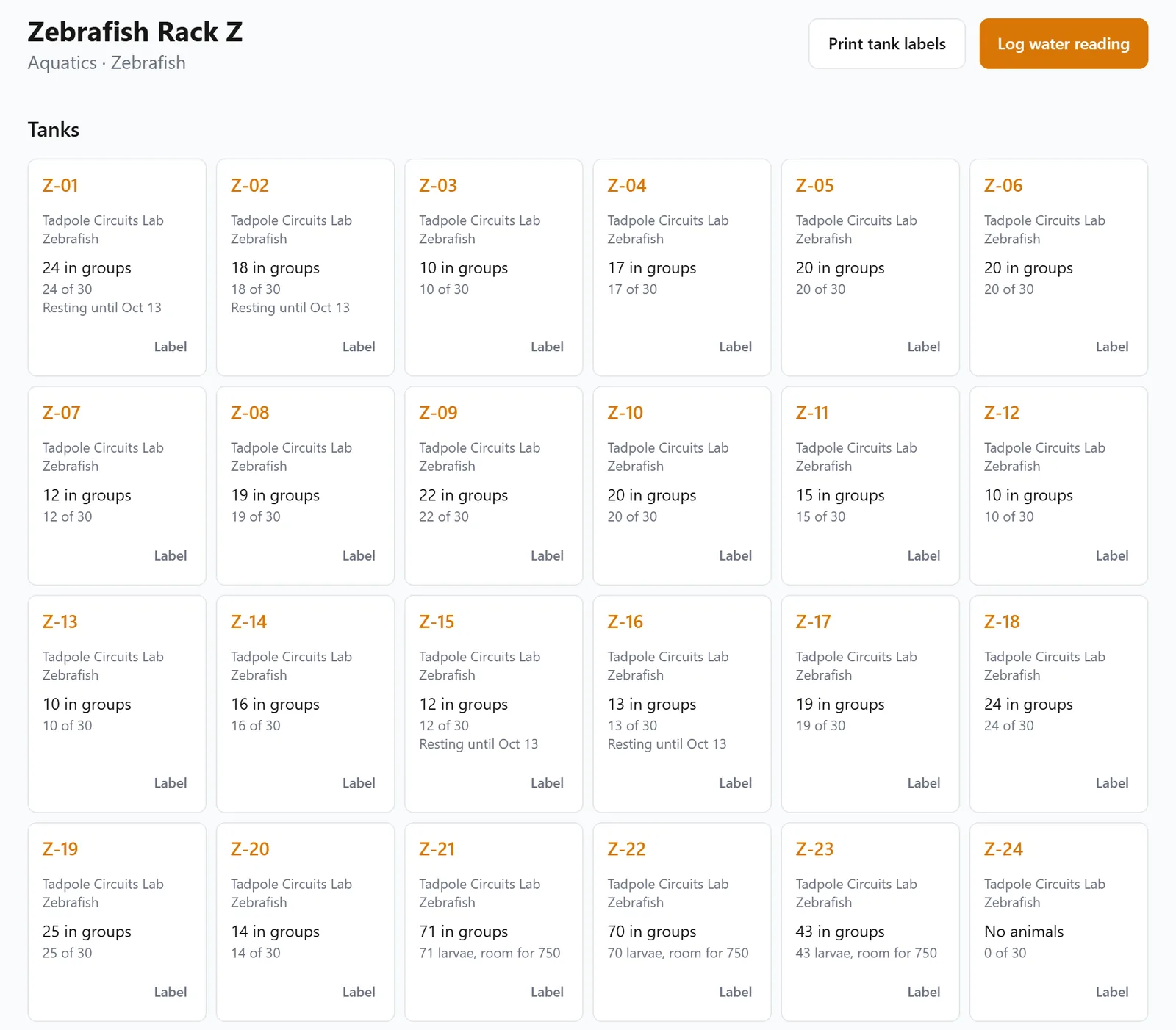
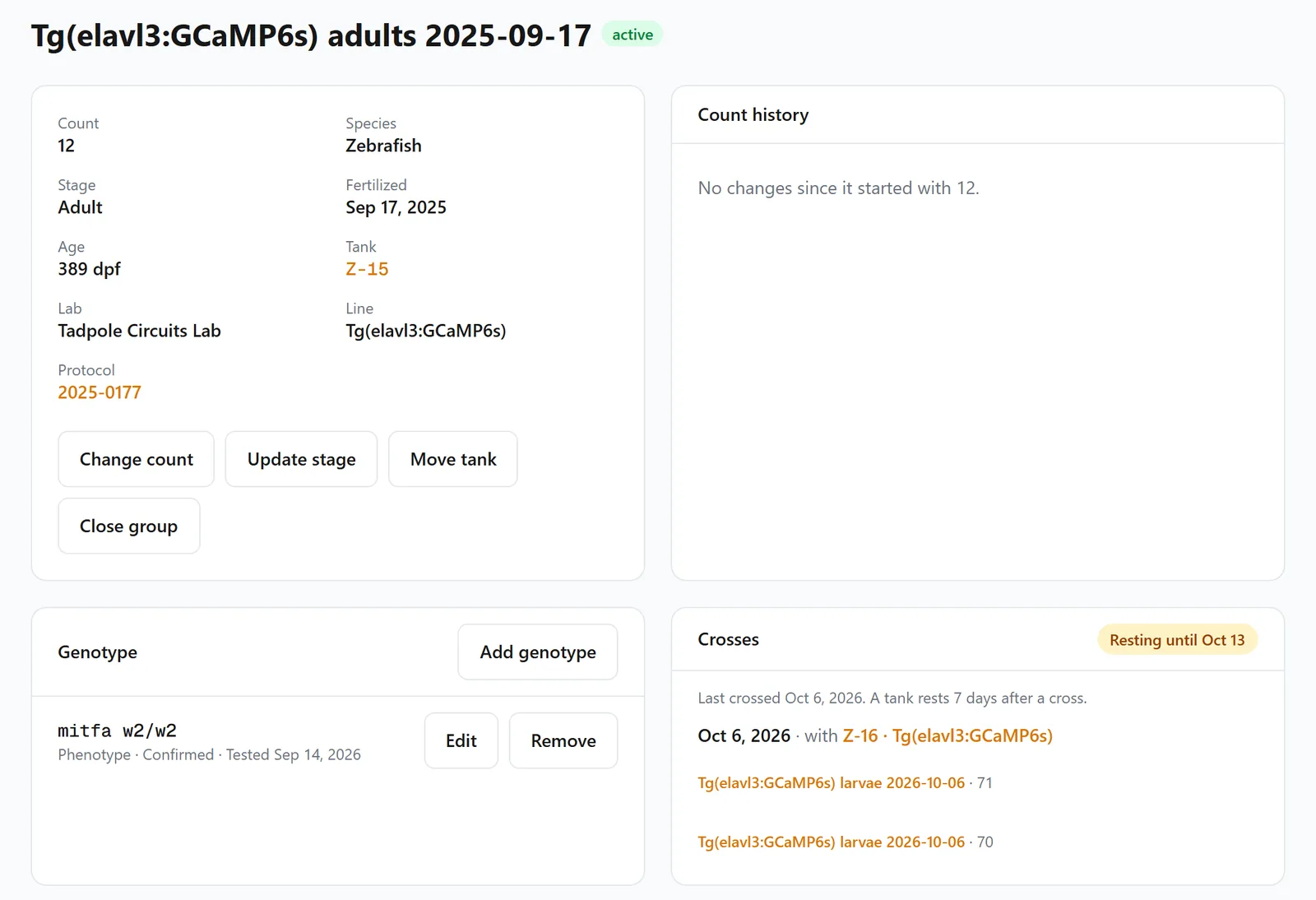
Each tank shows its line, fertilization date, count and genotype, and systems start from published water ranges, with a density check on every tank.
Published water ranges to start from
A new zebrafish system starts from the ranges in FELASA's zebrafish husbandry recommendations, for larvae and adults alike.
Your facility admin can change any range for a system. A reading outside one is flagged.
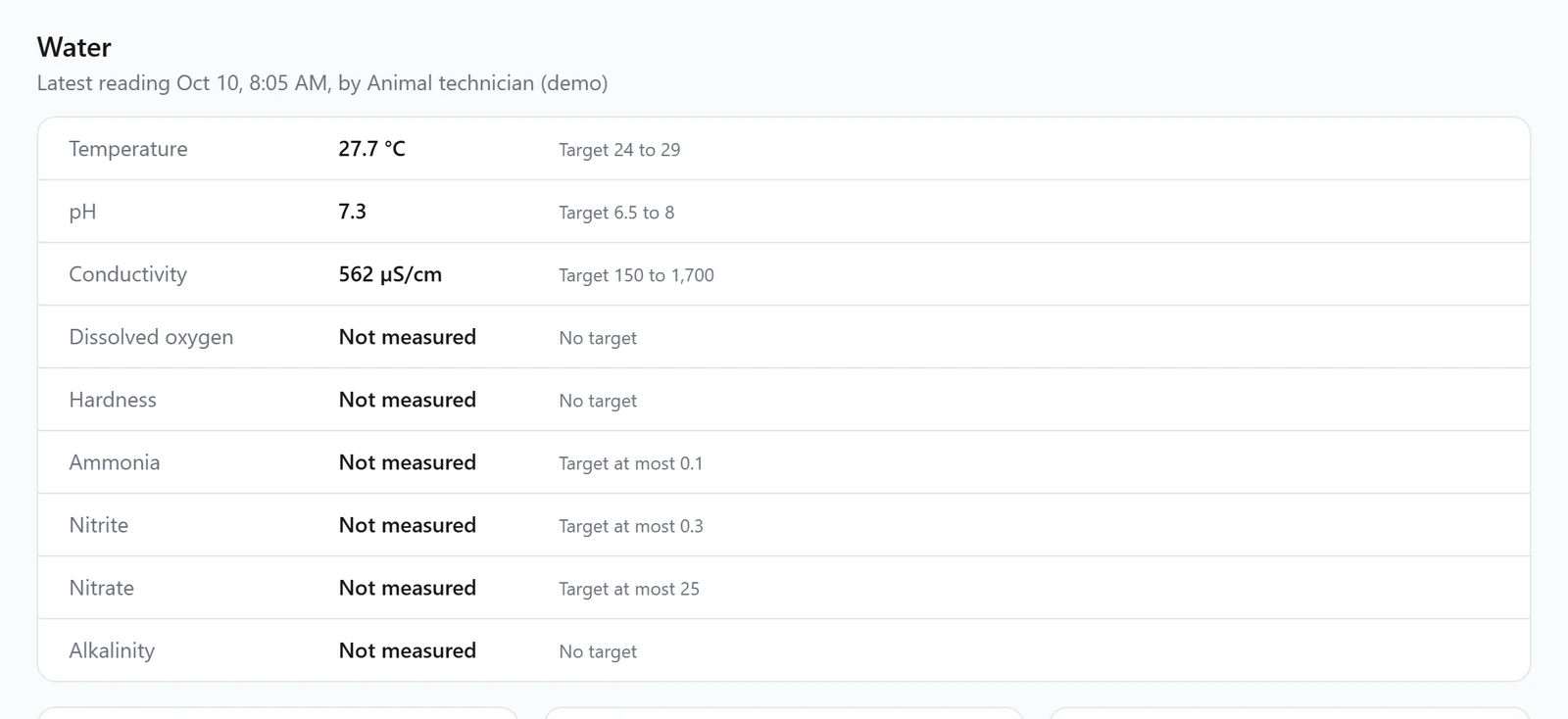
| Measure | Range |
|---|---|
| Temperature (°C) | 24 to 29 |
| pH | 6.5 to 8 |
| Conductivity (µS/cm) | 150 to 1,700 |
| Ammonia (mg/L) | at most 0.1 |
| Nitrite (mg/L) | at most 0.3 |
| Nitrate (mg/L) | at most 25 |
A density check on every tank
Each tank is checked against its volume, for adults and for larvae from 5 to 10 days after fertilization.
A tank over the limit is marked on its system and on Today.
| Fish | Room in the tank |
|---|---|
| Adults | Up to 10 per liter |
| Larvae, 5 to 10 days after fertilization | Up to 250 per liter |
Crosses recorded tank to tank
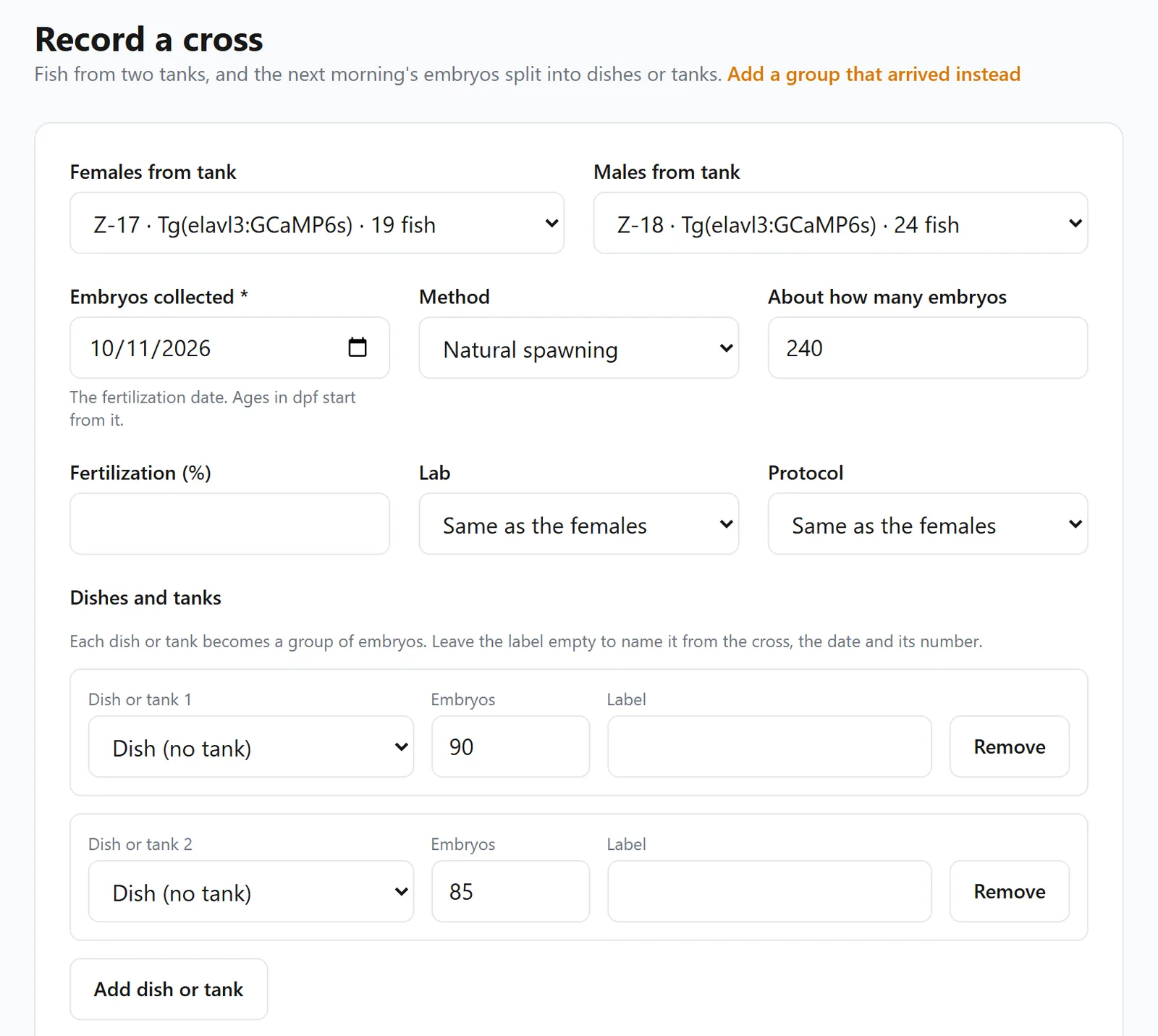
Record the tank the females came from and the tank the males came from, then split the next morning's embryos into dishes or tanks.
Each group of embryos keeps its two parent tanks, and both tanks rest for a week before they read Ready to cross.
Fish count from hatching
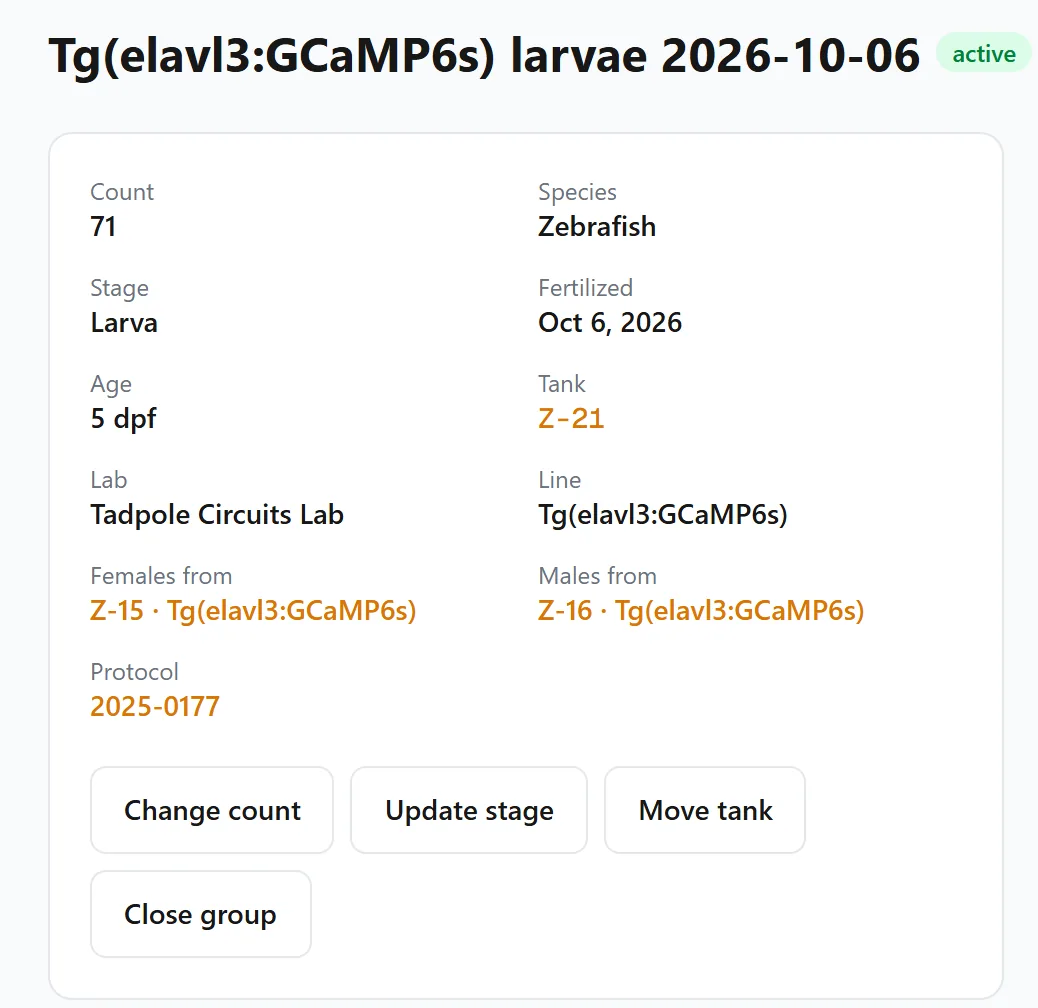
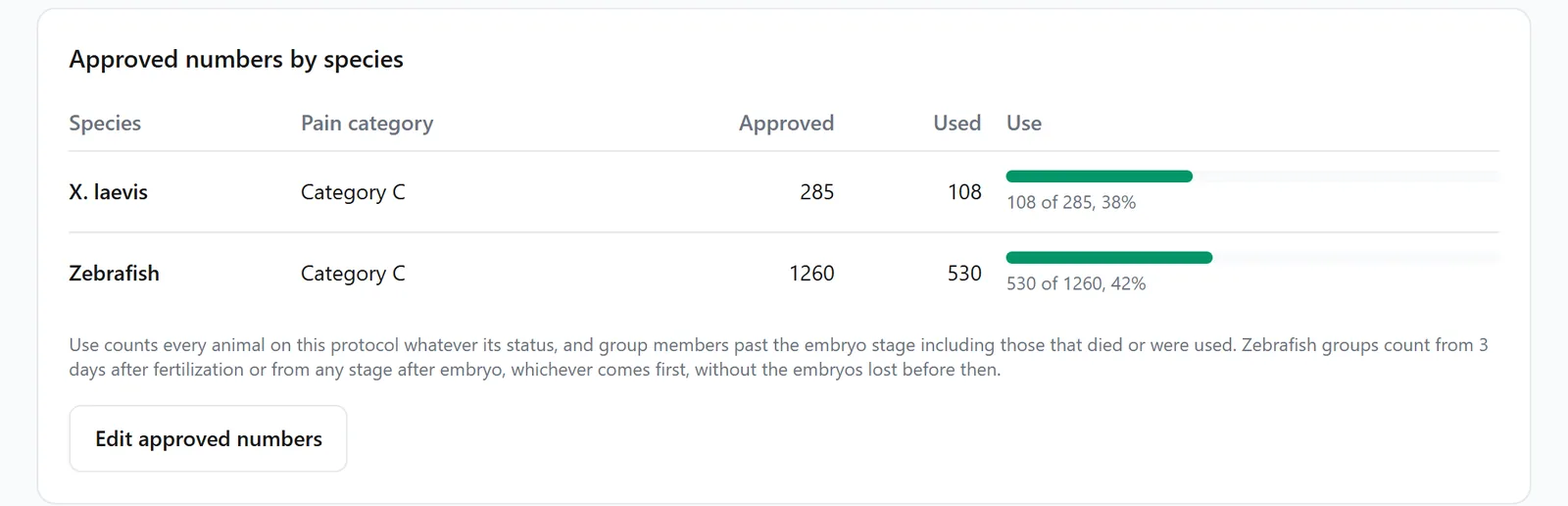
A group counts toward its protocol from 3 days after fertilization, when zebrafish typically hatch, or from any stage after embryo.
Embryos lost before then never count.
Line, fertilization date, count and genotype
Every group of fish carries its line, fertilization date, count and genotype, with its age in days after fertilization.
The tank label prints them, with a QR code that opens the tank.
Talk to us about your facility
Tell us how your facility tracks tanks, lines and crosses today, and we will show you zebrafish tanks in the sample facility.